When choosing glass materials for industrial, laboratory, heating, lighting, or high-temperature applications, two common options are quartz glass and borosilicate glass.
Although both materials offer good heat resistance and chemical stability, they are not the same. Their composition, temperature resistance, thermal expansion, optical properties, and suitable applications can be significantly different.
Understanding these differences can help buyers choose the right material for their specific application.
What Is Quartz Glass?
Quartz glass, also known as fused quartz or fused silica, is made primarily from high-purity silicon dioxide (SiO₂). It is known for its excellent resistance to high temperatures, very low thermal expansion, and high purity.
Quartz glass tubes are widely used in applications where ordinary glass materials cannot withstand demanding operating conditions.
Common applications include:
- High-temperature heating equipment
- Semiconductor processing
- Laboratory equipment
- UV lamps
- Infrared heating systems
- Industrial furnaces
- Solar and photovoltaic equipment
- Custom industrial components
Because of its excellent thermal stability, quartz glass is especially suitable for environments involving rapid temperature changes and high operating temperatures.
What Is Borosilicate Glass?
Borosilicate glass is a type of glass made mainly from silica and boron trioxide. Compared with ordinary soda-lime glass, it has better resistance to heat and thermal shock.
Borosilicate glass is commonly used for:
- Laboratory glassware
- Chemical containers
- Cookware
- Lighting products
- Pharmaceutical packaging
- Sight glasses
- General industrial equipment
It is a reliable material for many applications, but its performance at extremely high temperatures is generally lower than that of high-purity quartz glass.
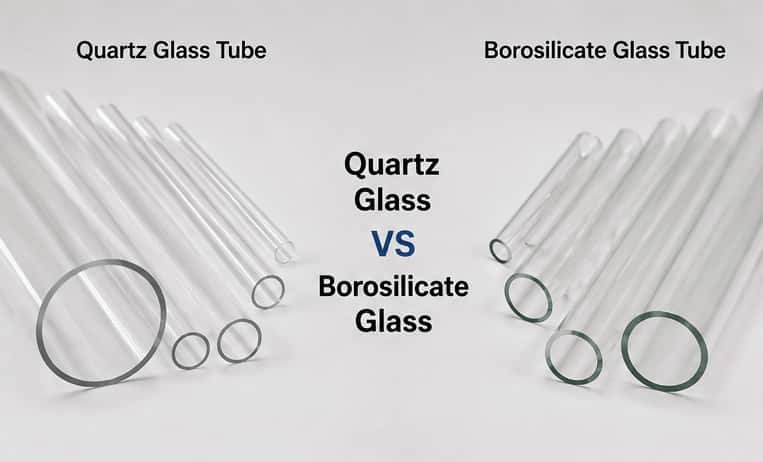
Quartz Glass Tube vs. Borosilicate Glass Tube
1.Temperature Resistance
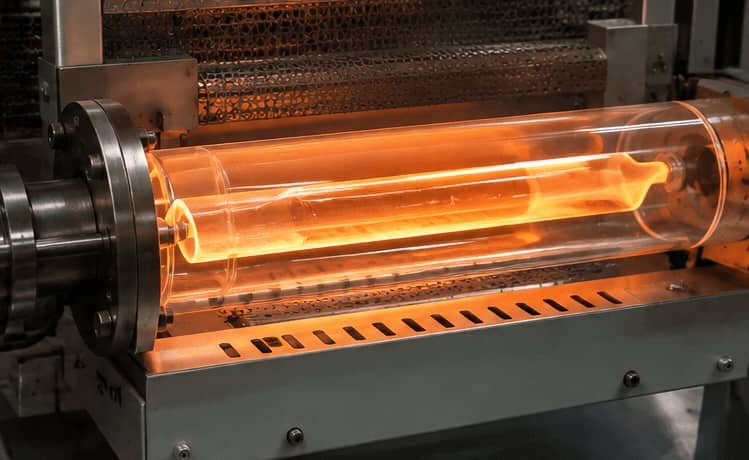
One of the biggest differences between quartz glass and borosilicate glass is their ability to withstand high temperatures.
Quartz glass has excellent high-temperature resistance and is suitable for demanding heating and industrial applications. It can maintain stable performance in environments where conventional glass materials may soften or lose their mechanical strength.
Borosilicate glass also has good heat resistance, but it is generally better suited for medium-temperature applications.
For applications involving extremely high temperatures, quartz glass tubes are often the preferred choice.
2.Thermal Expansion
Quartz glass has an extremely low coefficient of thermal expansion. This means that its size changes very little when the temperature changes.
This property gives quartz glass excellent resistance to thermal shock.
For example, in applications involving rapid heating and cooling, a quartz glass tube can provide greater stability than many other types of glass.
Borosilicate glass also has a relatively low thermal expansion compared with ordinary glass, but quartz glass generally performs better under extreme temperature changes.
3.Purity
High-purity quartz glass is made primarily from silicon dioxide and can be produced with very low levels of impurities.
This makes quartz glass particularly suitable for applications that require clean and stable materials, such as semiconductor manufacturing, laboratory equipment, and specialized industrial processes.
Borosilicate glass contains additional materials, including boron compounds and other components, which give it its characteristic properties.
The choice between the two materials may therefore depend on the purity requirements of the application.
4.Optical and UV Properties
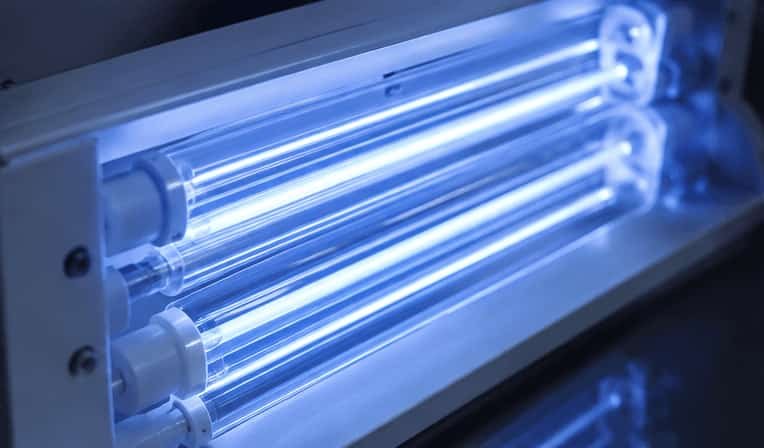
Quartz glass has excellent optical properties and can transmit ultraviolet light more effectively than standard glass materials.
For this reason, quartz glass tubes are commonly used in:
- UV lamps
- UV sterilization equipment
- UV curing systems
- Optical equipment
- Specialized lighting applications
Borosilicate glass is suitable for many lighting and laboratory applications, but it does not provide the same UV transmission performance as high-quality quartz glass.
5.Chemical Resistance
Both quartz glass and borosilicate glass offer good resistance to many chemicals.
However, the specific chemical environment should always be considered when selecting a material. Factors such as temperature, chemical concentration, pressure, and operating time can affect the long-term performance of the glass.
For demanding industrial applications, it is important to select the material based on the actual working conditions.
6.Cost
Borosilicate glass is often more economical for general-purpose applications.
Quartz glass can have a higher material and manufacturing cost because of its purity requirements and specialized processing.
However, for applications involving high temperatures, UV transmission, low thermal expansion, or high purity, quartz glass may provide better long-term performance and reliability.
Main Differences at a Glance
| Property | Quartz Glass Tube | Borosilicate Glass Tube |
| Main Material | High-purity SiO₂ | Silica with boron compounds |
| High-Temperature Resistance | Excellent | Good |
| Thermal Expansion | Extremely low | Low |
| Thermal Shock Resistance | Excellent | Good |
| UV Transmission | Excellent | Limited compared with quartz |
| Purity | Very high | Moderate to high |
| Chemical Resistance | Excellent in many applications | Good in many applications |
| Typical Cost | Higher | Generally lower |
When Should You Choose a Quartz Glass Tube?
A quartz glass tube may be the better choice when your application requires:
- High operating temperatures
- Rapid heating and cooling
- Excellent thermal shock resistance
- Low thermal expansion
- High-purity material
- UV light transmission
- Custom dimensions or special processing
For general laboratory or medium-temperature applications, borosilicate glass may be a practical and cost-effective solution.
However, when the operating environment becomes more demanding, quartz glass can offer significant advantages.
Custom Quartz Glass Tubes for Different Applications
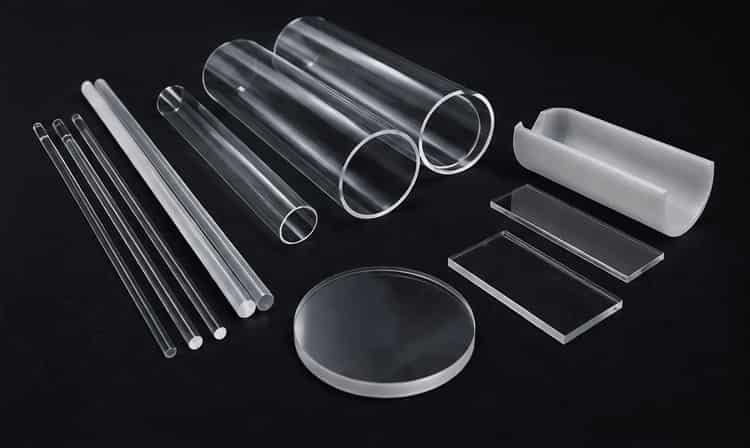
Different industrial applications often require different tube dimensions and processing methods.
A professional quartz glass tube manufacturer can provide customized products based on requirements such as:
- Outer diameter
- Inner diameter
- Wall thickness
- Length
- Cutting
- Grinding
- Polishing
- End processing
- Special shapes
- Custom production according to drawings or samples
Choosing the correct dimensions and processing method is just as important as choosing the correct material.
Conclusion
Both quartz glass tubes and borosilicate glass tubes are valuable materials with their own advantages.
Borosilicate glass is widely used because of its good thermal and chemical resistance and relatively economical cost. Quartz glass, on the other hand, offers superior performance in high-temperature, high-purity, UV, and demanding industrial applications.
Before selecting a glass tube, it is important to consider the actual operating temperature, thermal conditions, chemical environment, dimensional requirements, and application requirements.
For applications that require reliable performance under demanding conditions, high-quality quartz glass tubes can provide an effective and long-lasting solution.
If you are looking for customized quartz glass tubes, quartz glass rods, quartz plates, or other quartz glass components, working with an experienced manufacturer can help ensure that the product meets your specific requirements.
Contact Us
Looking for a reliable quartz glass tube manufacturer?
At Crystal Dragon, we specialize in the production and custom processing of quartz glass products, including:
- Quartz Glass Tubes
- Fused Quartz Tubes
- High-Purity Quartz Tubes
- Quartz Glass Rods
- Quartz Plates
- Quartz Boats
- Custom Quartz Glass Components
We can customize products according to your specific requirements, including diameter, wall thickness, length, and special processing.
Whether you need standard quartz glass products or custom-made solutions based on your drawings or samples, our team is ready to help.
zishunzhao935@gmail.com
+86 19850699449